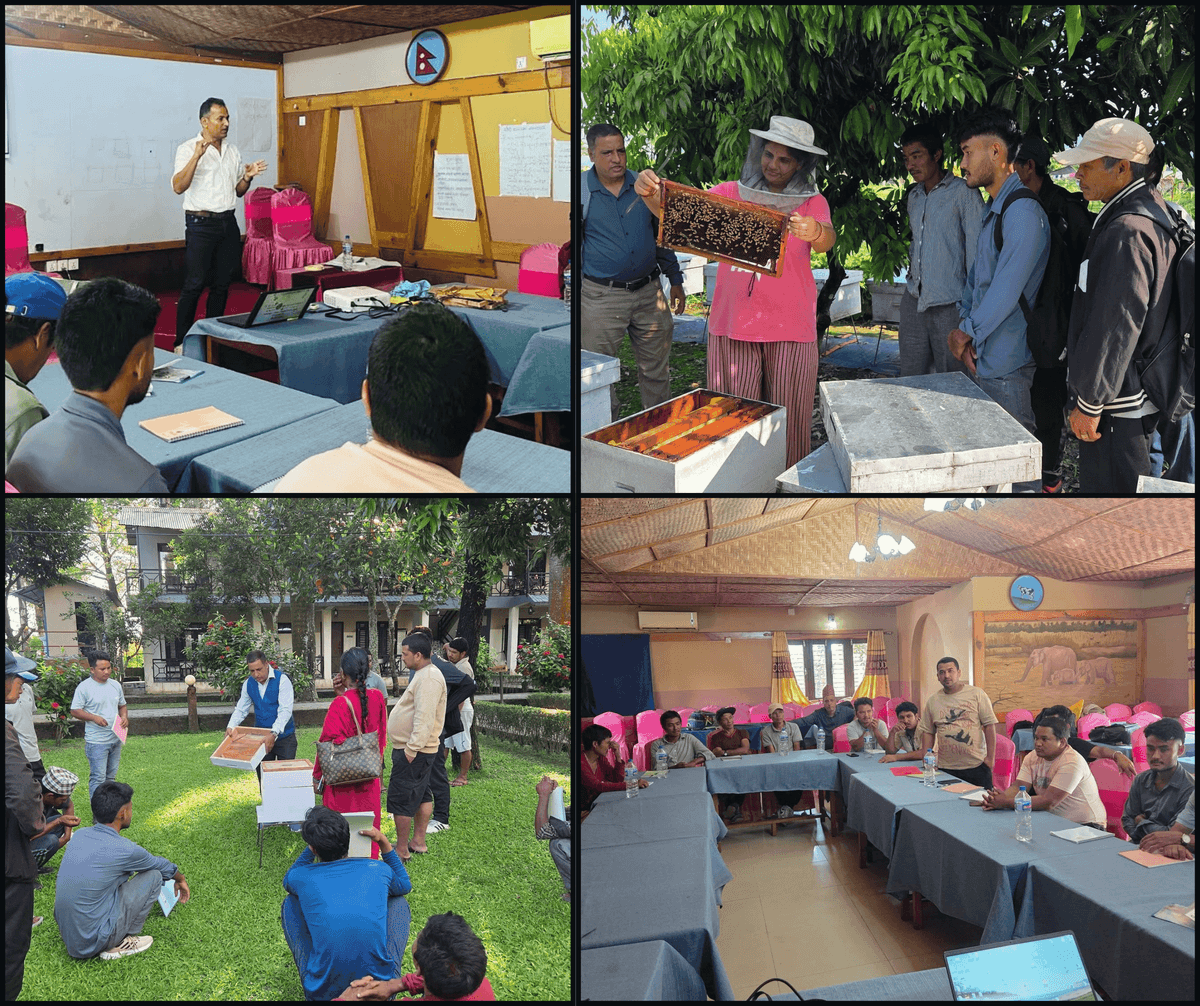
Sapana Village Social Impact (SVSI) has organized a three-day technical beekeeping training in Sauraha, Chitwan, aimed at strengthening the skills of rural farmers and promoting beekeeping as a sustainable source of income.
A total of 15 farmers from Ichhakamana Rural Municipality–1 and 2, representing Hattibang, Kaule, Chhapdada, Tobang and Ghurkesh, participated in the training. The participants had previously received basic beekeeping training and were identified as model farmers. The latest training focused on strengthening their technical and practical knowledge, particularly in the management of Apis cerana.
The training was led by Hem Subedi, a beekeeper and trainer with 30 years of experience in beekeeping. Participants received practical and technical knowledge about honeybees, including different bee species found in Nepal, the life cycle of bees, the roles of different members of a colony, and modern beehive structures and management.
As part of the practical learning, the farmers also visited commercial beekeeping farms in Chitwan operated by the trainer. The visit allowed participants to observe beekeeping practices firsthand and gain practical experience in hive and colony management.
Speaking during the programme, SVSI Founder Dhruba Giri encouraged the farmers to take ownership of their beekeeping activities and develop them into sustainable livelihood and income-generating enterprises. He also highlighted the contribution of beekeeping to environmental conservation and pollination, which supports both agricultural production and healthy ecosystems.
The training is part of SVSI’s ongoing efforts to strengthen rural livelihoods by providing communities with practical skills and opportunities for income generation.
SVSI thanked the International Rainwater Harvesting Alliance (IRHA) for its continued partnership and support for community development initiatives.