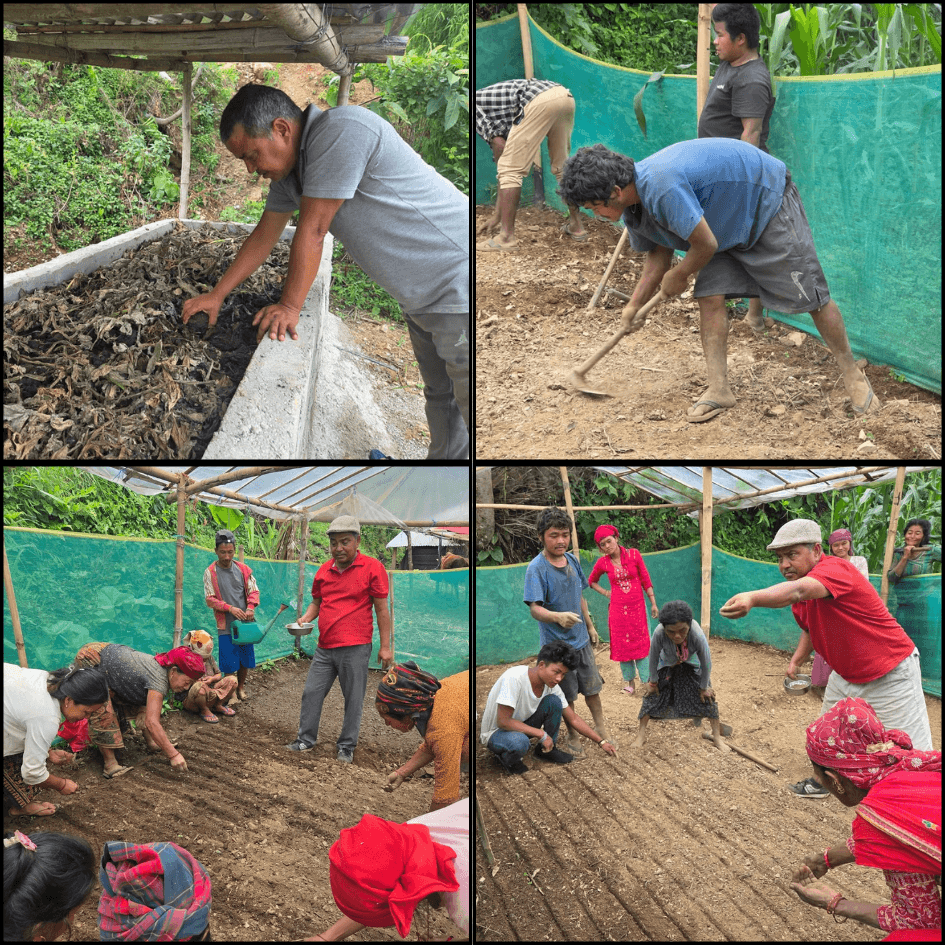
Chitwan, Nepal — Sapana Village Social Impact (SVSI), in collaboration with the International Rainwater Harvesting Alliance (IRHA), conducted field trainings and follow-up sessions last week across multiple rain-fed communities to strengthen sustainable and climate-resilient agricultural practices.
A total of 57 farmers from four communities—Tobang, Hattibang, Chhapdada, and Ghurkesh—participated in hands-on field demonstrations focused on soil management techniques adapted for different crops, including mustard, coriander, and carrot, intended for polytunnel cultivation systems.
The sessions emphasized practical, low-cost methods to improve soil health, increase productivity, and support year-round vegetable production under changing climate conditions. Farmers engaged directly in field-based learning, allowing them to apply techniques suited to their local soil and water conditions.
In addition to the training activities, SVSI is strengthening organic soil fertility systems through vermicomposting. Earthworms introduced into project vermicompost pits are now actively processing organic waste, with an expected output of approximately 300 kg of vermicompost within the next two months. This organic fertilizer will be used to enhance soil fertility in the polytunnels and reduce dependence on chemical inputs.
Through these coordinated interventions, SVSI continues to build local capacity in sustainable agriculture, promote agro-ecological farming practices, and support resilient livelihoods in vulnerable rural communities.
The initiative is implemented in close partnership with the International Rainwater Harvesting Alliance (IRHA), reinforcing a shared commitment to climate adaptation, water-smart agriculture, and community-led development.
SVSI remains committed to scaling practical solutions that strengthen food security, improve soil health, and enable farmers to adapt effectively to increasing climate variability.