


Comprehensive Community Development Program
Sapana Village Social Impact (SVSI) has launched the Comprehensive Community Development Programme project to empower 1,289 families, primarily from the Chepang community, through sustainable development initiatives. The project operates in Siddhi (Kalika 10 and 11) and Kaule (Ichchhakamana-1), located in Nepal’s Chitwan District, and will benefit a total of 7,411 people across 13 villages. In collaboration with local health posts, schools, government bodies, and youth leaders, this three-year project focuses on building community resilience by improving healthcare, sanitation, food security, and income-generating opportunities.
For two years, SVSI has worked side by side with Chepang and other vulnerable families in the mid-hills of Chitwan, investing in clean water, healthier homes, stronger farms, and new livelihoods building change that lasts well beyond the life of the project.
WASH and Infrastructure Development
Building the foundation for healthy, dignified living safe sanitation, clean water, and smoke-free homes for the families who need them most.
A safe toilet, a smoke-free kitchen, and clean drinking water are the foundation everything else is built on. Over two years, SVSI helped families lay that foundation while investing in the people, especially mothers and community health volunteers, who protect that progress every day.
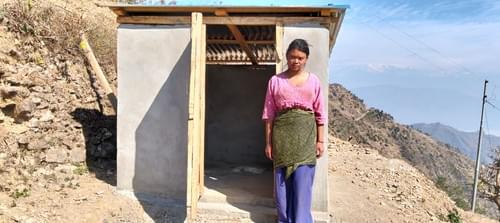
We built 21 new toilets including a disability-friendly unit in Parang and restored 103 more, bringing 124 households safe, dignified sanitation, including over 310 peop le reached in Year 2 alone. We installed 200 smokeless stoves, clearing indoor smoke from the daily lives of more than 675 people, most of them women and children who spend the most time near the hearth.
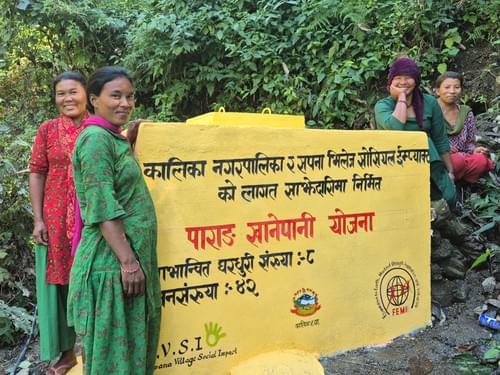
For 16 households in Bartesh and Parang, we ended a daily two-hour walk for drinking water by connecting homes directly to piped supply time now spent farming.
We also built 32 improved goat sheds with integrated compost pits, turning livestock waste into a resource for the farm. School WASH clubs across Siddhi and Kaule are now reaching over 1,000 students with hygiene education that will shape a generation. And a six-day pediatric medical camp screened 960 children, catching 24 cases early enough to connect them with specialist care.
Infrastructure alone isn’t enough without people to sustain it. 150 mothers were trained in gender equality, social inclusion, nutrition, and hygiene knowledge they now pass on at home every day. 4 Female Community Health Volunteers (FCHVs) in Kaule are actively tracking child nutrition household by household, catching problems early. We ran 16 refresher training sessions for Mother’s Groups and 7 institutional capacity-building sessions for Village Implementation Committees (VICs), strengthening the local leadership that will carry this work forward long after any single project ends.
Livelihood Promotion
Growing stronger farms and new careers equipping farmers, women, and youth with the skills and resources to earn a sustainable living.
For families in these hills, a stronger farm and a new skill mean more than income they mean choice, stability, and a future for the next generation. SVSI’s livelihood work meets families where they are, whether that’s in the field, the barn, the workshop, or the classroom, with 449 farmers trained and 69 women and youth launched into new careers over two years.
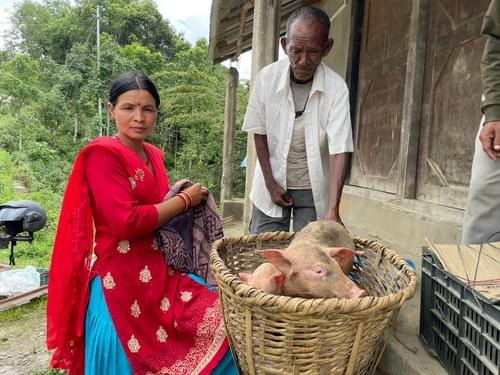
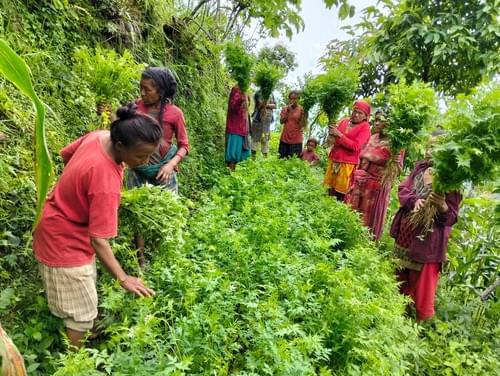
105 farmers learned silage-making, producing 155 packets of preserved fodder to see livestock through lean seasons. 117 livestock farmers now make their own low-cost mineral supplements from local materials. 28 farmers trained in goat care generating stable income by producing an average of 15 marketable goats per year by farmer rearing more than 20 goats. 76 farmers in orchard management, boosting citrus yields across the hills. 30 farmers received hands-on piglet-rearing training paired with deworming and vitamin support a single pig now earns a family an average of NPR 45,000 after nine months of rearing.
8 plastic tunnel houses are extending the growing season, helping 200 households earn a combined NPR 3.67 million from tomatoes, beans, chilies, cucumbers, and cauliflower. In Year 2 alone, 88 farmers received vegetable seeds, and 12 nurseries were established to keep fodder, vegetable, mandarin, and lime seedlings flowing into the community.
Beyond the farm, SVSI helped 50 households (30 in Year 1, 20 in Year 2) launch pig-rearing as a new household enterprise, and supported 4 grocery shops, 1 tailoring shop, and 1 home reconstruction in Chherbang for particularly vulnerable families. 36 entrepreneurs completed the 16-week Strengthen Your Business Plan (SYBP) program with Good Return Australia, gaining the financial skills to grow what they’ve started.
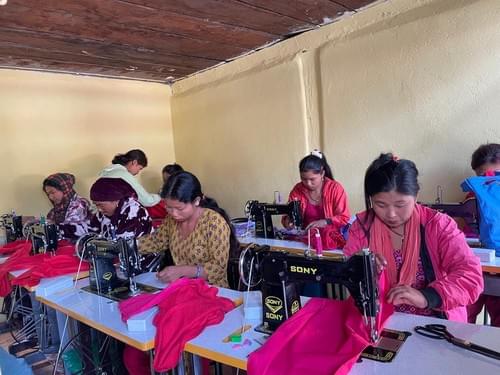
For youth and women building new careers, SVSI opened direct pathways to employment. In Year 1, 112 youth were oriented to vocational pathways, with 5 going on to advanced four-month residential training. In Year 2, 8 women completed beauty parlor training one advancing to a six-month course in Kathmandu while 5 youth completed hospitality training, with 3 now employed at Sapana Village Lodge. At the new Tindovan vocational center, 20 women completed tailoring training, and 11 are now continuing on as paid interns, turning a new skill into a steady income.